29 Temmuz 2026 Çarşamba
Assoc. Prof. Dr. Ali Şenol, a faculty member of our department, visited the Department of Informatics,
Systems and Communication (DISCo) at the University of Milano-Bicocca in Italy from 8 to 12 June 2026 within the scope of the Erasmus+ Staff Mobility for Training Programme.
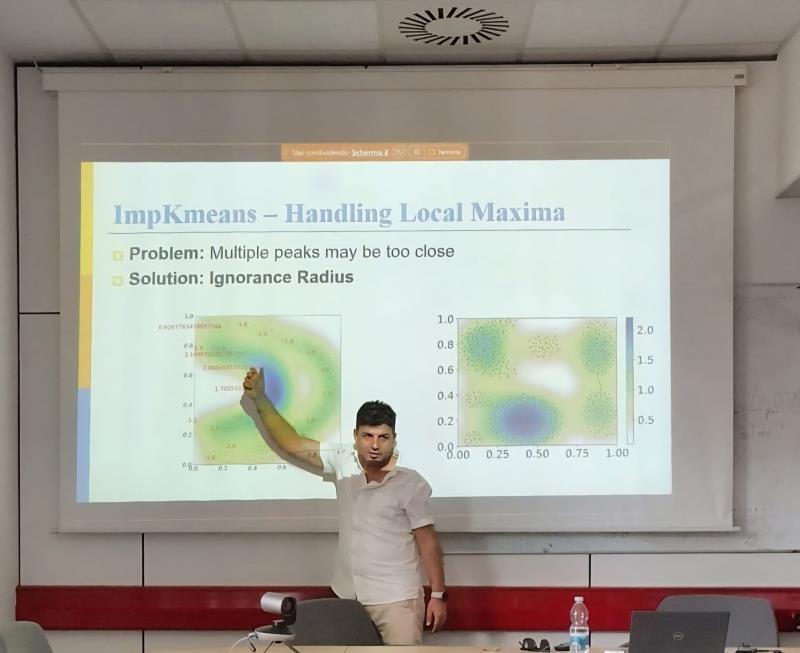
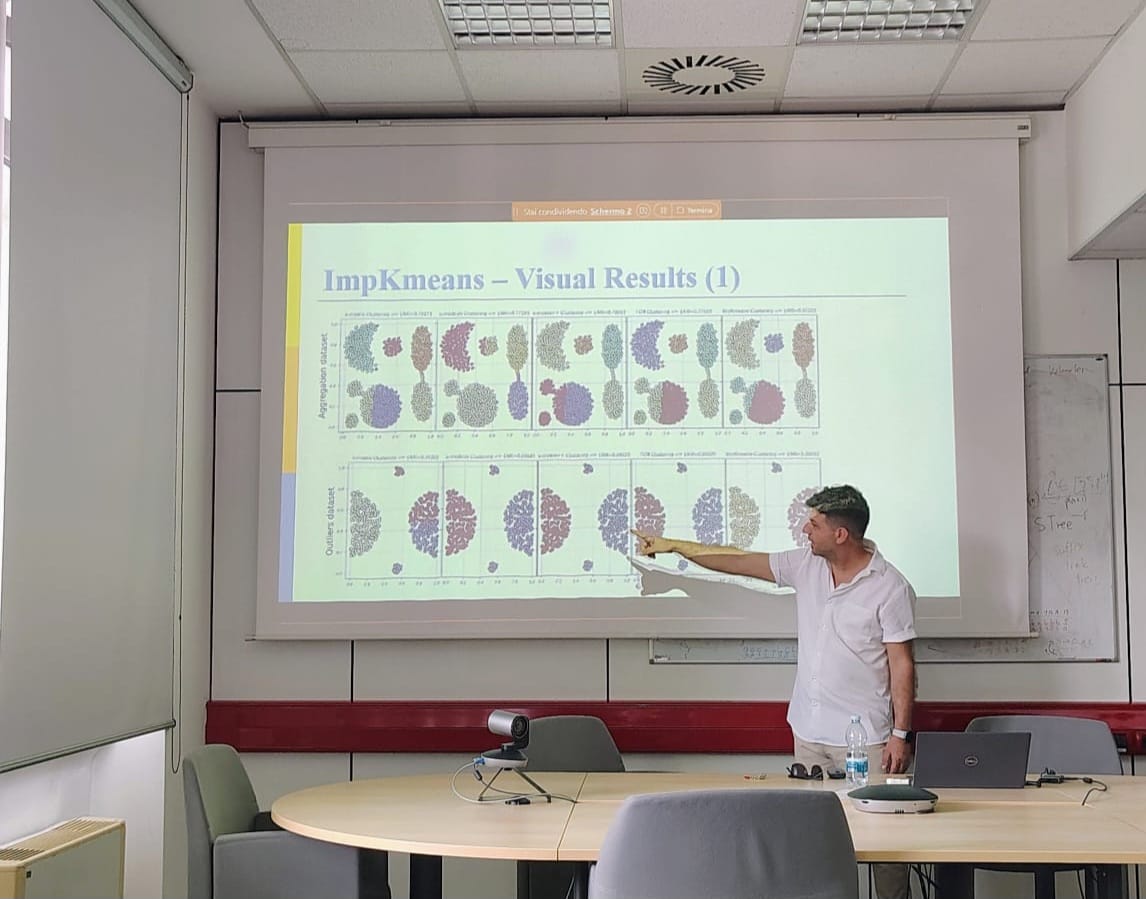
During the visit, Assoc. Prof. Dr. Ali Şenol delivered two seminars introducing the innovative clustering algorithms he developed:
1. “
ImpKmeans: An Improved Version of the K-Means Algorithm”
In this seminar, the ImpKmeans algorithm was presented as a solution to the randomness problem associated with the selection of initial centroids in the conventional K-means algorithm. By using Multivariate Kernel Density Estimation (MulKDE) and KD-Tree structures to determine optimal initial centroids, the proposed method significantly improves clustering performance and stability.
For further information about the event,
please click here.
2. “
MCMSTClustering: Defining Non-Spherical Clusters”
The second seminar introduced the MCMSTClustering algorithm, developed to identify non-spherical and arbitrarily shaped clusters. This hybrid approach, which employs a Minimum Spanning Tree (MST) over KD-Tree-based micro-clusters, demonstrates strong performance on datasets with varying densities and attracted considerable interest from the participants.
For further information about the event,
please click here.
In addition to the seminars, Assoc. Prof. Dr. Ali Şenol participated in job-shadowing activities in data science and machine learning courses at the host department, organized workshops on potential joint research ideas, and explored opportunities for long-term collaboration between the two universities.
This academic visit marked an important step in enhancing the international visibility of our department and promoting the scientific work of our faculty members among their European colleagues. We congratulate our faculty member on his successful representation and valuable contributions and wish him continued success in his academic studies.